

If you're like most cat owners, you've probably experienced that moment of sheer panic when you can't find your feline friend. Maybe they're under the bed, hiding in a box, or perhaps they've perfected the art of invisibility. While cats are known for their stealth, when they actually go missing, it's a whole different story. Enter the marvel of cat microchipping—a tiny technology that can make a big difference in reuniting lost pets with their owners.
TL;DR: Microchipping your cat is a quick, painless process that dramatically increases the chances of finding them if they get lost.
Should I Microchip My Cat?
In short, yes. Microchipping is like giving your cat a permanent ID card that they can't lose (unlike the 17 collars they’ve shed). Microchipped cats have a return-to-owner rate of approximately 38%, compared to only 2% for unmicrochipped cats, according to Northeastern Vet Care. This statistic alone makes microchipping a no-brainer for responsible pet ownership.
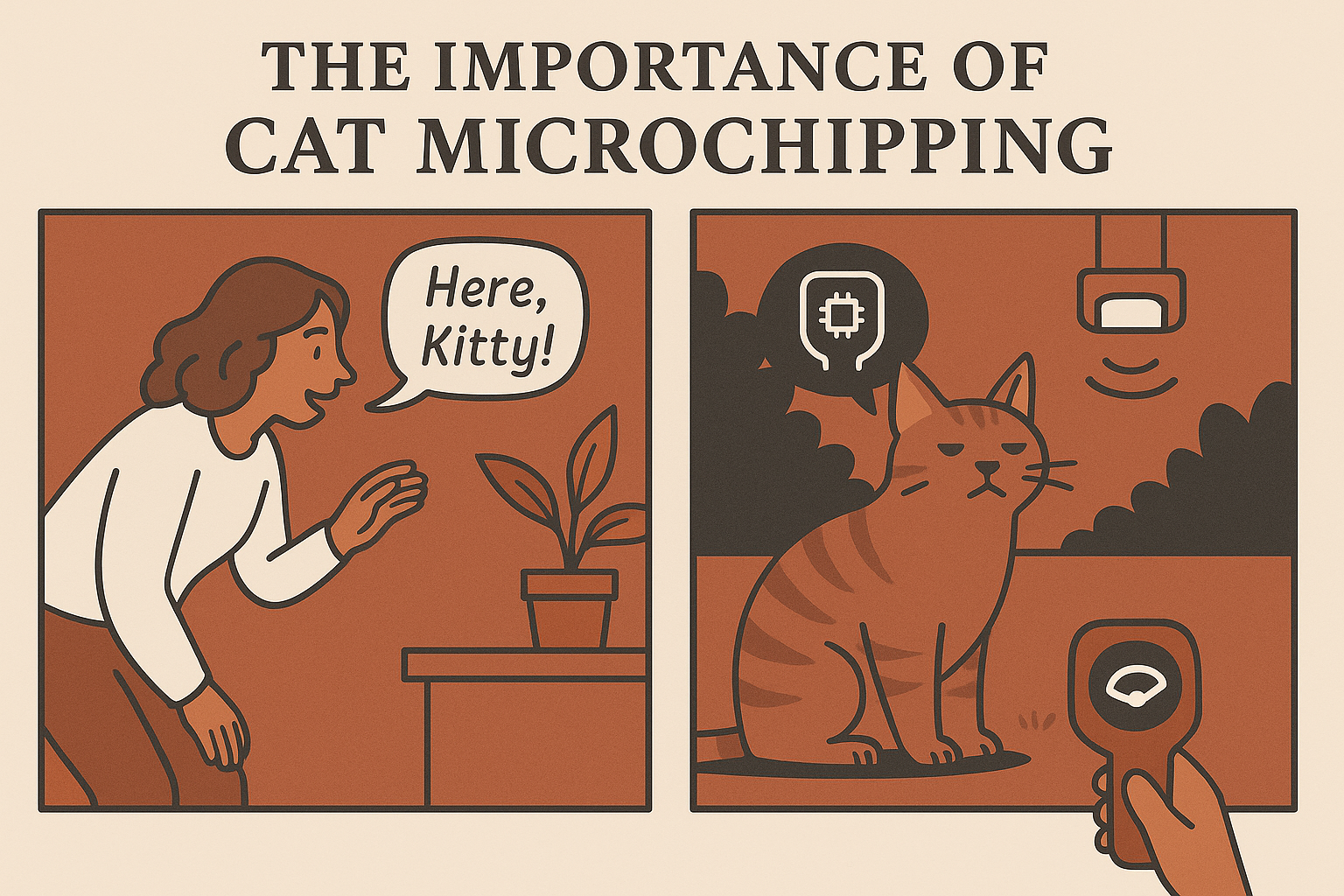
The process is straightforward and no more painful than a regular injection. A microchip, which is about the size of a grain of rice, is inserted under your cat's skin, typically between the shoulder blades. This chip holds a unique identification number that is linked to your contact information in a pet recovery database. So, if your cat decides to go on an unscheduled adventure, any vet or animal shelter with a scanner can help reunite you.
Consider the story of Mittens, a tabby who wandered five miles from home only to be picked up by an animal control officer. Thanks to her microchip, Mittens was back in her owner's arms within 24 hours. Without the chip, she may have ended up in a shelter, waiting for a family that would never come. This is not just an isolated incident; similar stories abound, illustrating the effectiveness of microchipping.
How Does Microchipping Help Find Lost Cats?
Let's say Fluffy decides to explore the great outdoors and forgets to leave breadcrumbs. If she's microchipped, the chances of a happy reunion skyrocket. Here's how it works:
- Pet Found: If a good Samaritan or local animal control finds your wandering kitty, they can take her to a vet or shelter.
- Chip Scanned: These facilities have microchip scanners that can read the chip's ID number.
- Owner Contacted: The staff looks up this ID in a secure database, which provides your contact details.
- Happy Reunion: You're called, and you can bring Fluffy back home, hopefully with a new appreciation for indoor comforts.
Research from RSPCA Queensland shelters indicated that 51% of microchipped cats were reclaimed by their owners, compared to only 5% of unmicrochipped cats (PMC article). That's a lot of relieved humans and, presumably, nonchalant cats.
In another example, a study of over 7,700 stray animals at animal shelters across 23 states found that microchipped animals were significantly more likely to be returned to their owners compared to non-microchipped animals (American Veterinary Medical Association). Imagine the relief of a family in Ohio who found their beloved Siamese, Oscar, after he was missing for three weeks, all thanks to his microchip. These real-world scenarios underscore the importance of microchipping.
Practical Microchipping Advice
Before you rush to the vet, here are a few practical tips:
- Keep Your Contact Information Updated: Your cat's microchip is only as good as the information linked to it. If you move or change your phone number, update the database. One family almost lost their chance to find their cat, Whiskers, because they forgot to update their address after moving. This oversight can easily be avoided with a quick call or online update.
- Pair with a Collar: While a microchip is permanent, it doesn't hurt to have an external ID tag for immediate identification. Just make sure the collar is a breakaway type, so it's safe for your cat. A neighbor once found a cat with a collar but no tag, only to discover it was microchipped and successfully returned it to its owner. The combination of a collar and microchip provides both immediate and long-term identification.
- Scan Regularly: During routine vet visits, ask if they can scan the microchip to ensure it's working properly and hasn't migrated (cats, right?). A quick scan can prevent a lot of heartache later. This simple step ensures that the chip remains in place and functional, ready to serve its purpose if your cat ever decides to test their survival skills.
Common Mistakes and Misconceptions
One common misconception is that a microchip acts as a GPS. Sadly, it won't help you track a midnight prowl in real-time. It's more of a "found and return" system, rather than a "follow-the-adventure" tracker. If you're looking for real-time tracking, you'll need a separate GPS collar.
Another mistake is assuming indoor-only cats don't need microchips. Trust me, even the most indoorsy of cats can slip outside (often aided by an unsuspecting human) and suddenly think they're Bear Grylls. Indoor cats are often the most curious when they do get outside, making them more prone to wandering off. A microchip provides peace of mind that if they do explore beyond the living room, they can find their way back to you.
Lastly, some believe microchipping is a complex, risky procedure. In reality, it's simple and quick, with minimal discomfort—your cat will probably forgive you faster than they did for that ill-fated vet visit. A vet once told me about a particularly grumpy Persian who barely flinched during the procedure, only to give a disdainful glare afterward. This minimal reaction is typical, as the procedure is designed to be as stress-free as possible.
FAQ
Should I microchip my cat?
Absolutely. Microchipping significantly increases the chances of finding your cat if they get lost. It's a safe, quick, and relatively inexpensive procedure.
How does microchipping help find lost cats?
If your cat is found, a vet or shelter can scan the chip and access your contact details to help reunite you with your pet.
Is microchipping painful for my cat?
No more than a standard injection. It's a quick procedure that most cats handle well.
Do microchips have GPS tracking?
No, microchips do not have GPS. They work as a permanent ID that helps others identify and contact you if your cat is found.
How often should I update my contact information?
Every time your contact details change. Otherwise, the microchip can't do its job of reuniting you with your cat.
In conclusion, while microchipping may not prevent your cat from plotting global domination, it will certainly help bring them back if their plans involve a little too much adventure. For more on ensuring your cat's safety and happiness, check out our guide to adopting a rescue cat or learn how to introduce cats to each other.

