

Cats: those strangely majestic creatures that treat your living room like a five-star hotel and your lap like an optional VIP lounge. But when it comes to deciding whether they should roam the great outdoors or stay comfortably within your home, the debate of indoor vs outdoor cats gets as heated as a sun-drenched windowsill. Let's dive into the pros and cons so you can make an informed choice while your cat, of course, does whatever it wants.
TL;DR: Indoor cats are safer from accidents and disease but may need more enrichment. Outdoor cats get natural stimulation but face higher risks.
Is it better to keep cats indoors or outdoors?
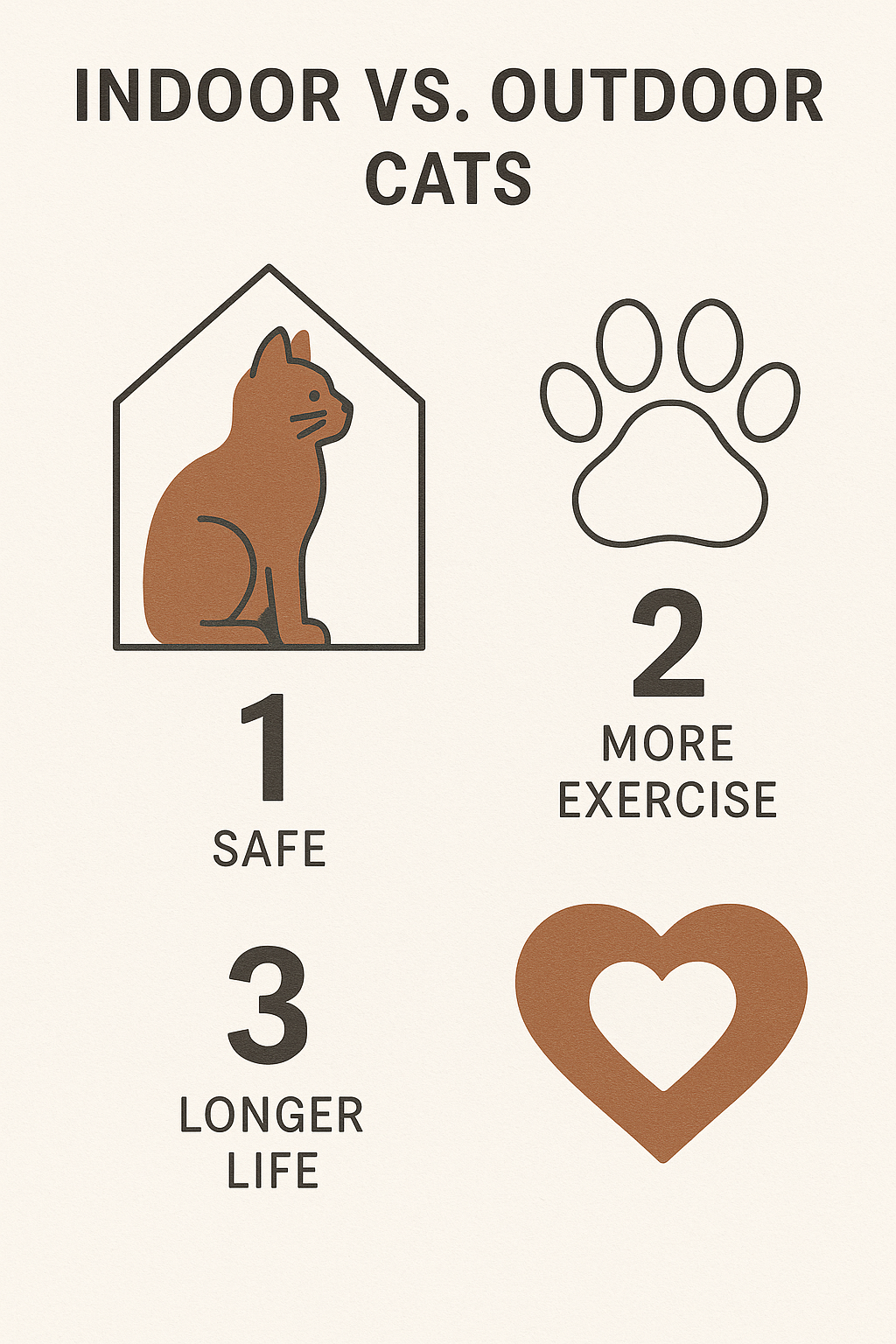
Well, that's the million-dollar question, isn't it? Keeping cats indoors protects them from numerous dangers like road accidents, animal attacks, and exposure to diseases. According to Cats Protection, indoor cats are less likely to contract parasites or infectious diseases. Basically, they're in a germ-free bubble — if such a thing could exist in a house with a litter box.
But before you roll your cat up in bubble wrap, consider this: outdoor cats can exhibit more natural behaviors such as hunting and territorial patrolling, which may contribute to their mental well-being. A study in PMC9494968 found that outdoor cats were significantly more active, particularly in the evening and at night. This suggests they might be more in tune with their wild ancestors, though they also have a penchant for bringing home "gifts" you'd rather they didn't.
Moreover, outdoor cats tend to consume more calories, about 260 kcal daily compared to 223 kcal for indoor cats, due to their increased activity levels. This means that while they might be living their best life chasing after imaginary prey, they also need more energy to sustain their adventurous lifestyle. However, this active lifestyle comes with its set of challenges, like the constant threat of traffic and other urban hazards.
What are the risks of outdoor cats?
Let’s not beat around the bush here — free-roaming outdoor cats pose a significant threat to wildlife, as evidenced by research from the Wildlife Center of Virginia. They kill billions of birds and small mammals each year. That's right, your sweet Muffin might be a tiny tiger in disguise.
And the dangers aren't only for the birds and mice. Outdoor cats are like little furry daredevils, facing risks from traffic, other animals, and even humans. They also have higher chances of catching diseases. The great outdoors might be a thrilling theme park for them, but it's also a minefield.
Consider the case of a neighborhood tabby who roams freely. While they might enjoy the thrill of the hunt and the breeze through their whiskers, they are constantly at risk of getting into fights with other cats or encountering larger predators. Studies show that outdoor cats have a shorter lifespan due to these hazards, making indoor life a safer, albeit less adventurous, option.
Providing a safe environment indoors
Indoor life, however, isn't all sunshine and cozy naps. Without enough enrichment, indoor-only cats may experience frustration and behavioral issues. You don’t want a bored cat on your hands — they might get creative in ways you'd prefer they didn't.
To combat this, consider creating a cat-friendly home environment. This can include cat trees, interactive toys, and scratching posts. Think of it as providing a feline amusement park, minus the roller coasters (unless you count your cat knocking things off tables as a thrill ride).
Additionally, indoor cats benefit from mental stimulation through puzzle feeders and regular playtime. Imagine setting up a laser pointer obstacle course or a feather toy chase around the living room — it's like hosting the kitty Olympics. Indoor cats may also enjoy watching the world from a safe perch by the window, providing them with visual stimulation without the associated risks.
Moreover, incorporating safe houseplants can add to their environment. You might want to check out our guide on safe houseplants for cat owners to ensure your greenery is as feline-friendly as your furniture.
The hybrid lifestyle: Best of both worlds?
If you're torn between keeping your cat indoors or letting them explore outside, there is a middle ground: the hybrid lifestyle. This approach offers controlled outdoor access, such as through a catio or leashed walks, as suggested by Aztec Pet Hospital.
Imagine your cat, strutting down the sidewalk on a leash, all the while giving the neighborhood dogs a masterclass in cool. Using a catio or supervised outdoor time allows them to engage in natural behaviors while minimizing risks. It's like letting them taste the freedom of the wild while keeping one paw on the safety line.
For those considering a catio, think of it as a luxury penthouse for your cat. It provides a safe space for them to bask in the sun, watch the birds, and sniff the fresh air without the dangers of free-roaming. Hybrid lifestyles can be the perfect compromise, offering the best of both worlds.
FAQ
How do I make my indoor cat's life more interesting?
Cats thrive on mental and physical stimulation. Invest in interactive toys, puzzle feeders, and vertical spaces like cat trees. Rotate toys regularly to keep things fresh.
Can outdoor cats return to being indoor cats?
Yes, with patience and a gradual transition. Start by bringing them inside for short periods, gradually increasing the time each day. Enrichment is key to making them comfortable indoors.
Are catios safe for all cats?
Most cats can adapt well to catios, but always supervise their initial outings. Ensure the enclosure is secure and free from hazards.
How can I protect wildlife from my outdoor cat?
Consider using a bell on your cat's collar to warn wildlife. Alternatively, keep your cat indoors during peak bird activity times, such as early morning and late afternoon.
Do indoor cats live longer than outdoor cats?
Generally, yes. Indoor cats tend to live longer due to reduced exposure to potential dangers like traffic and infectious diseases, but a stimulating environment is crucial to their happiness.
In the end, whether your cat is indoors, outdoors, or a little bit of both, the goal is to keep them happy and healthy (yes, again). And remember, your cat probably has its own opinion on the matter; it's just not sharing it with you.

