

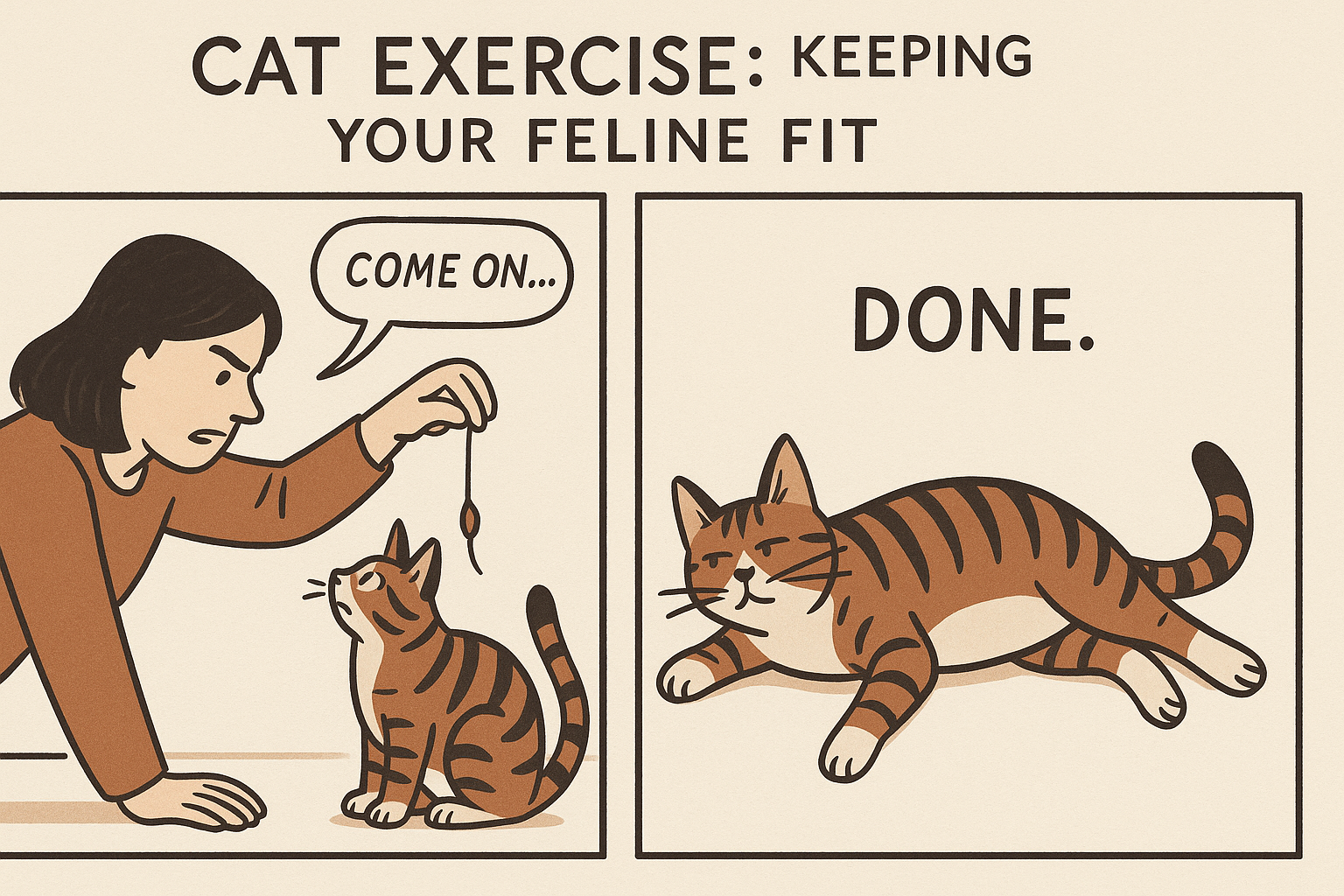
Cat Exercise: Keeping Your Feline Fit
Most indoor cats face a significant risk of obesity due to limited opportunities for physical activity compared to their outdoor counterparts. This is primarily because the natural environment outdoors offers more chances for exercise and exploration, which indoor settings often lack. Understanding how to properly exercise your cat is crucial for maintaining their health and preventing obesity-related conditions such as arthritis and diabetes. According to International Cat Care, outdoor cats typically maintain a healthier weight due to these natural exercise opportunities.
TL;DR: Exercise for indoor cats is essential to prevent obesity and related health issues. Use vertical spaces, interactive toys, and regular play sessions to keep them active.
How Can I Exercise My Indoor Cat?
Exercise for indoor cats requires creativity and commitment from their owners. For cats that spend the majority of their time indoors, physical activity doesn't come as naturally as for those with outdoor access. A well-constructed indoor environment can provide ample opportunities for movement and stimulation. International Cat Care highlights that while outdoor cats maintain a healthier weight through natural exercise, indoor cats can achieve similar benefits through structured play.
Providing vertical spaces such as cat trees or shelves encourages climbing, which is a natural behavior that promotes exercise. Interactive toys, like feather wands and laser pointers, engage a cat's hunting instincts and can be used to simulate the chase. Additionally, puzzle feeders make mealtime an active experience, encouraging cats to move and solve problems, as suggested by Cats Protection. These feeders can be particularly effective, as they not only stimulate physical activity but also engage a cat's cognitive skills, making meal times both challenging and rewarding.
Consistency in play is key. Aim for at least two play sessions daily, each lasting 15 to 20 minutes. This routine not only helps maintain a healthy weight but also alleviates boredom and stress, contributing to overall mental health. A study indicated that cats engaged in regular play are less likely to develop behavioral issues such as aggression or anxiety, which are often linked to boredom and inactivity. According to a study published in the Journal of Feline Medicine and Surgery, regular play can reduce stress-related behaviors by up to 40% in some cats.
What Are the Benefits of Cat Exercise?
Regular exercise offers numerous benefits for cats, primarily reducing the risk of obesity. According to a PMC article on indoor-outdoor cats, obesity is a prevalent issue among indoor cats, leading to secondary health problems like diabetes. Exercise helps mitigate these risks by burning calories and building muscle. Engaging in regular physical activity also supports joint health, which is particularly important for older cats that may be prone to arthritis. In a study involving 50 indoor cats, those that participated in daily exercise routines showed a 30% improvement in mobility and a significant reduction in joint stiffness.
Beyond physical health, exercise also enhances a cat's mental well-being. Playtime acts as both a physical outlet and a mental challenge, reducing stress and preventing behaviors associated with boredom, such as excessive grooming or aggression. Engaging in regular play strengthens the bond between you and your cat, increasing trust and communication. Studies have shown that cats who are regularly exercised exhibit fewer signs of stress and are generally more sociable and content. A survey of cat owners revealed that 75% noticed improved mood and behavior in their cats after consistent play sessions.
Keeping Cats Active: Practical Tips
To keep your cat physically active, integrate exercise into their daily routine. Here are a few practical strategies to consider:
- Rotate toys regularly to prevent boredom. New toys or those not seen for a while can renew your cat's interest in play. This rotation can be as simple as hiding toys for a few weeks and then reintroducing them, making them seem new and exciting.
- Incorporate daily play sessions that mimic natural hunting behaviors with toys that dart, flutter, or roll unpredictably. These sessions can be varied in intensity and duration, depending on your cat's energy levels and preferences.
- Enhance their environment by adding new climbing structures or rearranging existing furniture to create new paths. Cats are naturally curious and will appreciate new routes to explore.
- Use treat-dispensing toys that require effort to retrieve rewards, turning snack time into an exercise opportunity. This not only provides physical activity but also mental stimulation, as cats figure out how to access the treats.
- Consider introducing a companion cat if your current cat is sociable, as they can encourage mutual play and exercise. However, ensure that your cat's temperament is suited to living with another feline before making this decision.
Common Mistakes in Cat Exercise
A common mistake owners make is underestimating the importance of variety in exercise routines. Cats can quickly become disinterested in repetitive activities. It's essential to introduce new games and toys regularly to keep their interest. For example, a feather wand might be exciting for a few weeks, but switching to a laser pointer or a motorized toy can renew a cat's enthusiasm.
Another frequent error is focusing solely on physical exercise without considering mental stimulation. Cognitive toys and puzzles can be just as crucial in maintaining a cat's fitness as physical toys. Lastly, neglecting environmental enrichment can hinder a cat's activity level. Ensuring your home is conducive to cat-friendly exploration and play is vital. Cats Protection emphasizes the role of a stimulating environment in encouraging active play and preventing boredom. A detailed guide on creating such environments can be found on their website.
FAQ
How often should I exercise my cat?
Cats should have at least two 15-to-20-minute sessions of playtime daily to maintain their physical and mental health.
What types of toys are best for cat exercise?
Interactive toys such as feather wands, laser pointers, and puzzle feeders are ideal for engaging a cat's instincts and promoting physical activity.
Can overweight cats become active?
Yes, gradually increasing the length and intensity of play sessions can help overweight cats become more active and improve their overall health.
Are there specific exercises for senior cats?
Senior cats benefit from gentle, low-impact activities like interactive toys and slow, steady climbing exercises to maintain mobility without strain.
Should I include outdoor time in my cat's exercise routine?
If safe and feasible, supervised outdoor time can enrich a cat's exercise routine. However, indoor activities can suffice if outdoor access isn't possible.
To explore more about creating enriching environments for cats, you can read our post on Cat Enrichment: Creative Ideas for a Happy Cat or learn about Creating a Cat-Friendly Home Environment.

