

Your cat, that mysterious sofa-hogging creature, is a complex bundle of instincts and quirks, much like a velvet pillowcase filled with springs. But here's the catch: if they're not sufficiently entertained or mentally stimulated, those springs can unwittingly turn on your curtains, sofa, or your sanity. Cat enrichment ideas are your best friend here, helping to channel that feline energy into less destructive avenues (and saving your furniture from becoming a scratching post).
TL;DR: Give your cat a stimulating environment with puzzle feeders, interactive play, cozy resting zones, and vertical spaces to keep them mentally and physically active.
What are some cat enrichment ideas?
So, your cat is lounging atop the fridge, eyeing you like they’re contemplating your essential role in their life (or lack thereof). To enrich their environment, consider this: an enriched indoor environment allows cats to express their natural behaviors, such as scratching and playing, which can prevent undesirable behaviors on household items (PMC - NIH). This means less time playing "why won't my human let me use the couch as a claw-sharpener?" and more time being a contented kitty.
-
Puzzle Feeders: Think of these as the Sudoku of the cat world. Puzzle feeders encourage mental and physical stimulation during feeding, allowing cats to express their natural hunting behavior and making mealtime more engaging (International Cat Care). These feeders can be as simple as a ball with kibble inside or as complex as a multi-level maze.
-
Interactive Play: Dust off that feather wand or laser pointer. Daily play sessions are not just exercise but an essential part of a cat's mental and emotional health. Daily enrichment activities, like interactive play, significantly benefit indoor cats by providing mental and physical stimulation, which helps release those 'feel good' hormones (Cats Protection & Purina). Try mixing up the toys to keep things fresh and exciting for your feline friend.
-
Vertical Spaces: Cats love high places – it’s not just about being closer to the ceiling fan. Creating vertical zones with cat trees or shelves allows them to climb and perch, adding a new dimension to their territory. This not only satisfies their instinctual need to climb but also provides them with a vantage point to survey their kingdom.
-
Comfort Zones: Creating a cozy corner with a soft blanket or a window perch can provide your cat with a stress-free zone. Creating a 'comfort zone' for cats is essential for their emotional well-being and can help reduce stress (Best Friends Animal Society). Add a few of their favorite toys or a piece of your clothing to make the area smell familiar and comforting.
How to keep my cat mentally stimulated?
Cat boredom is real, and it’s not just about avoiding the "zoomies" during your Zoom meetings. Without adequate enrichment, indoor cats may experience distress, leading to behavioral disorders and stress-related medical diseases (American Veterinary Medical Association). A bored cat might start to exhibit signs of stress, such as over-grooming or aggression, which are not just troubling for your cat but for you as well.
-
Rotate Toys: Introduce a toy rotation system. Hide some toys and switch them out every week to keep them novel. This simple trick can make old toys seem new again and keep your cat engaged.
-
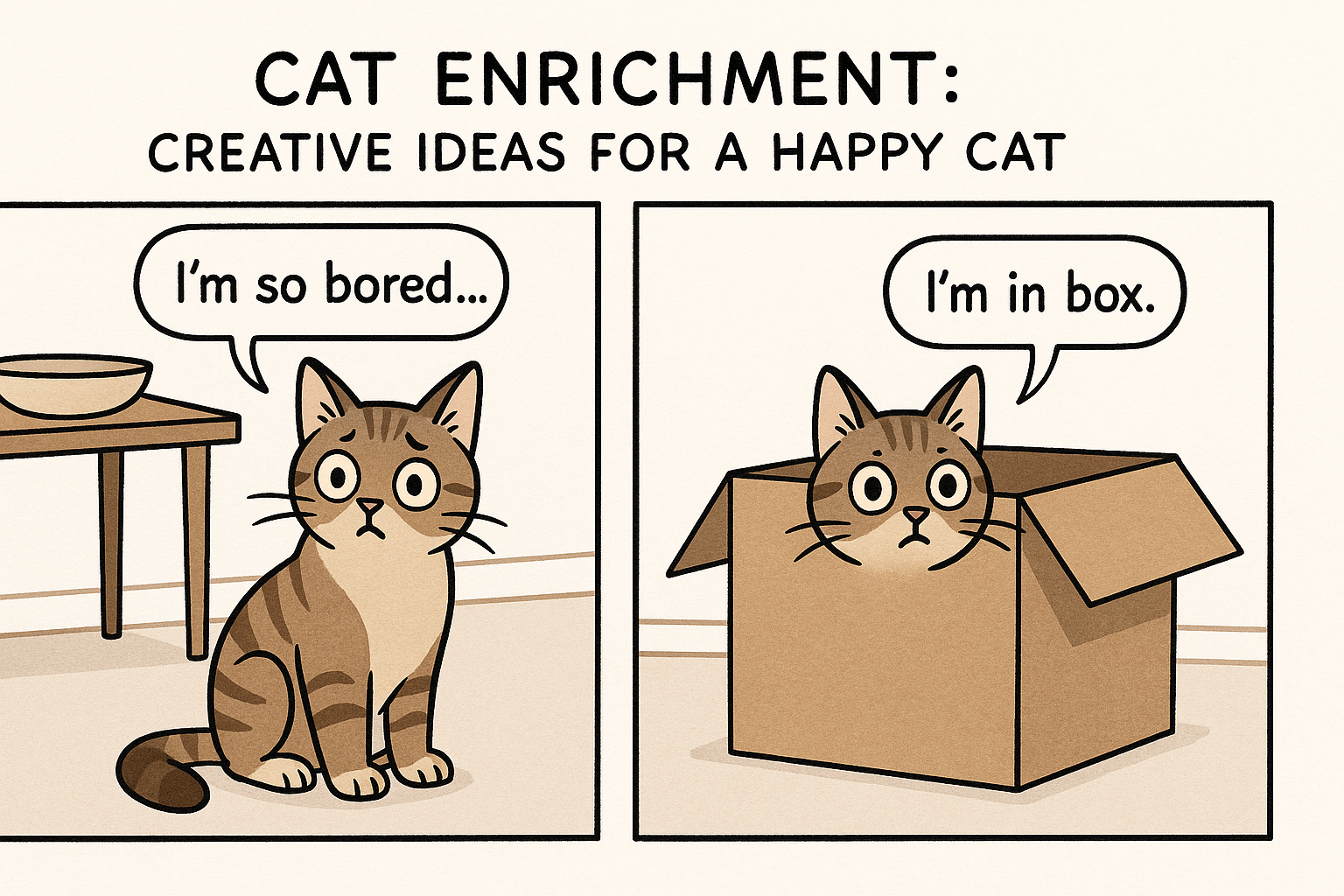
DIY Enrichment: Create DIY cat toys. A simple cardboard box with a few cut-out holes can become an exciting cave or fortress. Cats love to explore and hide, and a box can be a perfect playground.
-
Window Views: A cat-friendly window perch can double as entertainment and a sunbathing spot. Bonus points if there are birds outside for nature TV. Make sure the perch is stable and safe, as cats will likely jump on and off frequently.
-
Training and Tricks: Yes, cats can be trained! Use treats to teach tricks like sit, high five, or jumping through a hoop. This provides mental stimulation and strengthens your bond. Training sessions should be short and positive, turning learning into a fun game.
Practical Enrichment Tips
-
Scheduled Playtime: Make playtime a regular part of their day. Cats thrive on routine, and knowing when to expect playtime can make them less anxious and more engaged. Try to incorporate different types of play, such as chasing, pouncing, and batting.
-
Feeding Puzzles: As the ASPCA suggests, using puzzle feeders makes mealtime fun and engaging, encouraging cats to use their natural hunting instincts (ASPCA). Start with simple puzzles and gradually introduce more challenging ones as your cat becomes more adept.
-
Incorporate Nature: Simulate the outdoors by adding safe plants like cat grass or a small water fountain. Cats are naturally curious and will appreciate the sensory stimulation these additions provide.
-
Social Enrichment: If your cat is social, consider arranging playdates with other feline-friendly cats (with proper introductions, of course). This can be a great way to provide mental and physical stimulation, especially if your cat is an only child.
Avoiding Common Mistakes
While you might be tempted to buy every cat toy and gadget under the sun, remember that cats often find the simplest things the most engaging. That $50 laser-robot-cat-chaser might end up as an expensive paperweight when your cat becomes obsessed with an empty box. Balance spending on toys with DIY options and observe what your cat truly enjoys.
Also, don't overwhelm your cat with too much change at once. Introduce new activities gradually and keep an eye on their reaction. Cats are creatures of habit, and too much novelty can be stressful rather than enriching.
For more tips on creating the purrfect home, check out our post on creating a cat-friendly home environment. You might also find our guide on understanding feline play helpful for further insights into keeping your cat happy and engaged.
FAQ
How often should I engage in play with my cat?
Aim for at least two 15-minute sessions per day. This varies depending on your cat’s age and energy levels, but regular playtime is key to keeping your cat healthy.
Can all cats be trained to use puzzle feeders?
Most cats can adapt to puzzle feeders with a bit of patience and encouragement. Start with easier puzzles and gradually increase the difficulty.
How do I know if my cat is bored?
Signs of boredom in cats include excessive grooming, overeating, and uncharacteristic aggression. Providing varied enrichment can help alleviate these issues.
Are there any safety concerns with cat toys?
Always choose toys that are safe and durable. Avoid small parts that can be swallowed and supervise play sessions, especially with new toys.
Do all cats like vertical spaces?
While many cats enjoy climbing and perching, some may prefer staying closer to the ground. Observe your cat’s preferences and provide choices accordingly.
Happy enriching!

