

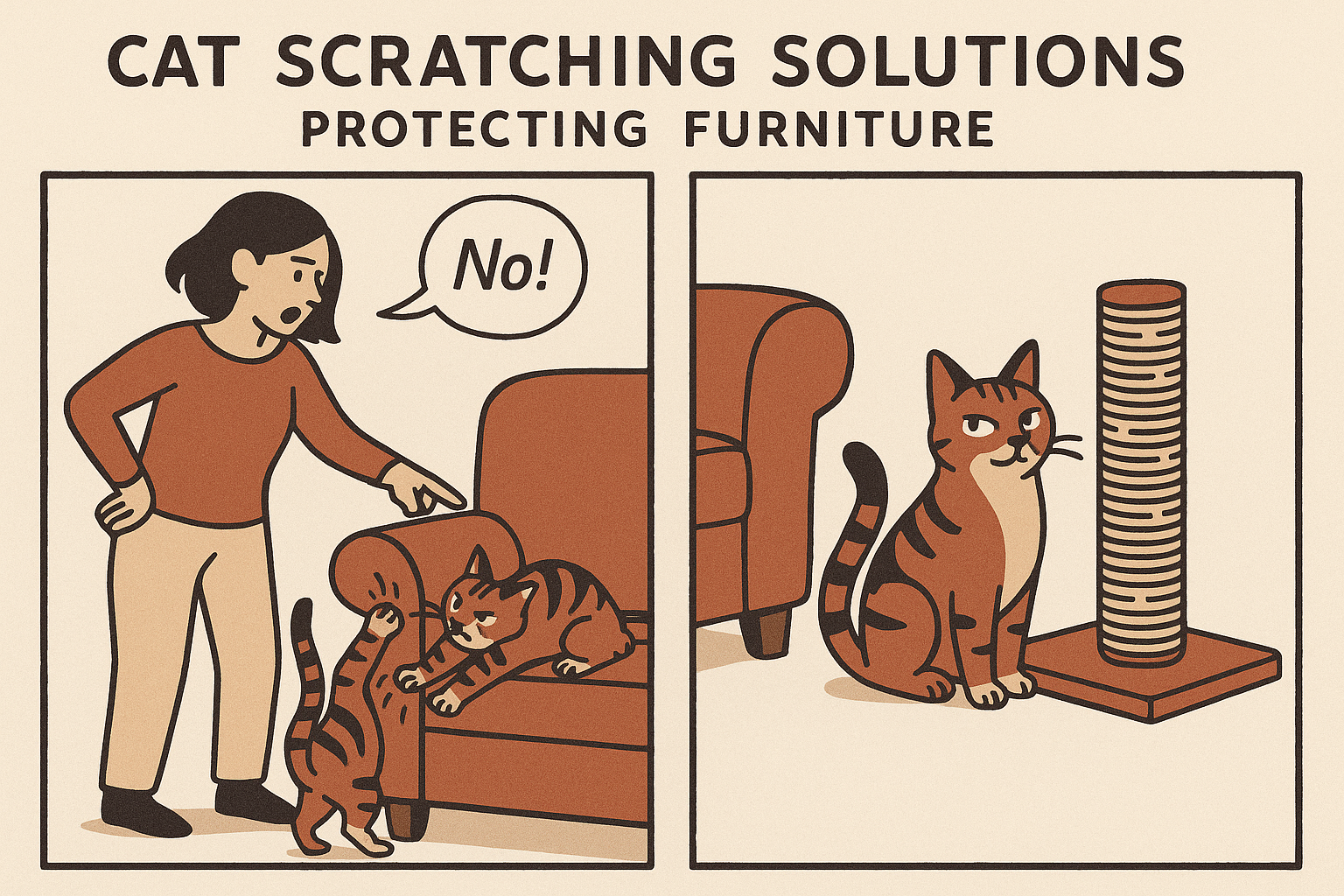
Cat Scratching Solutions: Protecting Furniture
Picture this: you’re lounging on the couch, basking in the glow of your latest Netflix binge, when you hear it—the unmistakable sound of claw on fabric. You turn, horror-stricken, to see your cat blissfully treating your beloved sofa like a personal scratching post. Before you resign yourself to a lifetime of shredded upholstery, let’s explore some cat scratching solutions to keep both your cat and your furniture happy.
TL;DR: Redirect your cat's scratching instincts to appropriate surfaces and use deterrents like pheromones and diverse scratching posts to protect your furniture.
How can I stop my cat from scratching furniture?
First things first: scratching is essential for cats. It’s their version of a spa day—they’re marking territory, sharpening claws, and stretching in ways we can only dream of (International Cat Care). So while you can’t stop scratching entirely (and wouldn’t want to if you love your cat), you can redirect it.
Start by placing feline scratching posts right next to the crime scene, a.k.a. your favorite chair. The closer the alternative, the more likely your cat will give it a try. According to the ASPCA, positioning is key, so make sure the post is sturdy and tall enough for a full-body stretch. Catnip can be your secret weapon here—sprinkle some on the post to entice your feline overlord to use it. Anecdotal evidence suggests that cats are more likely to use a post that mimics the texture of their previous scratching target, so consider a variety of materials.
Synthetic feline pheromones are another nifty tool in your anti-scratch arsenal. These pheromones mimic the natural scents that make cats feel chill and less likely to scratch out of anxiety or territorial instincts. In one study, 74% of cats redirected their scratching from furniture to pheromone-treated posts (PMC). If your cat is particularly stubborn, these might just tip the scales in your favor. The pheromones work by creating a calming environment, reducing stress that could otherwise lead to destructive behavior. Imagine a scenario where your cat, previously a terror to your armchair, suddenly finds solace in a pheromone-treated post, saving your furniture and your sanity.
What are the best alternatives for cat scratching?
Besides the trusty scratching post, consider a variety of textures and orientations. Cats can be as picky about their scratching surfaces as we are about our coffee order. Some like vertical surfaces, others prefer horizontal. Offering a selection can help satisfy their scratching needs and keep your furniture intact (your cat has read none of this). For example, some cats might prefer a cardboard scratcher, which not only satisfies their scratching urge but also gives them the satisfaction of shredding something to bits.
For the DIY enthusiasts, creating a custom scratching area using sisal rope or carpet remnants could be the pièce de résistance your cat’s been waiting for. Remember, the more variety, the better — it’s like a scratching buffet. You could also try placing these alternatives in different rooms to see where your cat prefers to scratch. This might give you insight into their territorial preferences. If you notice your cat gravitating towards a particular texture, such as sisal, it might be worthwhile to invest in more products made from that material.
Don’t forget to regularly trim your cat’s claws. This reduces the damage done when they do get their paws on something they shouldn’t. Regular trims will cut down on frays and tears, making your furniture a lot less inviting to a cat seeking a workout (Cornell Feline Health Center). If you're unsure how to trim your cat's claws safely, consider asking your vet for a demonstration. A well-timed trim can be the difference between a happy, healthy scratching session and a piece of furniture that looks like it’s gone through a shredder.
Redirect and protect: practical steps
To effectively protect your furniture, follow these steps:
- Identify and observe: Note where your cat loves to scratch. Is it that corner of the couch or the legs of the dining table?
- Strategic placement: Position scratching posts in these hotspots. Make sure they’re sturdy and well-suited to your cat’s scratching style. A good rule of thumb is to have at least one scratching post per room where your cat spends a lot of time.
- Entice with treats: Use catnip or toys to lure your cat to these posts. Reward them when they use the post instead of your furniture. Positive reinforcement can be a powerful motivator.
- Pheromones: Apply synthetic pheromones to the scratching posts to encourage use. This can be especially helpful if your cat is scratching due to anxiety.
- Claw trimming: Regularly trim your cat’s nails to minimize damage. This should be done every 1-2 weeks, depending on how quickly your cat's nails grow.
- Diversify: Offer a variety of scratching surfaces and textures to keep things interesting. This could include sisal, cardboard, carpet, and wood. Cats, much like humans, enjoy a bit of variety in their lives.
The scratching deterrent debate
Let’s talk about the elephant (or should I say cat) in the room: scratch deterrent sprays. While these are marketed as effective ways to keep cats off furniture, their success is about as predictable as a cat’s mood. Some cats will scoff at the scent and continue their destructive path undeterred.
The key is to experiment. Try different deterrents, and see what works best for your furry friend. And remember, no two cats are alike—what works for Fluffy might not work for Mittens. For more ideas on keeping your cat entertained and away from your sofa, check out our cat enrichment ideas post. If you find a deterrent that works, consistency is crucial. Apply it regularly and monitor your cat's reaction. Over time, you might find that a combination of deterrents and positive reinforcement yields the best results.
FAQ
Why do cats scratch furniture?
Scratching is a natural behavior for cats that helps them mark territory, sharpen their claws, and stretch their muscles. It’s not a malicious act; it’s instinctual.
Can I declaw my cat to stop scratching?
Declawing is highly discouraged as it is a painful and unnecessary procedure that can lead to behavioral issues. Instead, focus on redirecting their scratching to appropriate surfaces.
What if my cat ignores the scratching posts?
Experiment with different textures, sizes, and placements of scratching posts. Use treats or catnip to encourage their use. Synthetic pheromones may also help.
Are there any specific scratching post brands you recommend?
Look for sturdy posts made from sisal or a combination of materials. Brands like SmartCat or PetFusion offer reliable options.
How often should I trim my cat’s claws?
Aim to trim your cat’s claws every 1-2 weeks to prevent overgrowth and minimize damage.
Remember, protecting your furniture doesn’t mean sacrificing your cat’s natural instincts. With a little creativity and strategy, you can keep both your couch and your cat happy. For more tips on creating a cat-friendly environment, visit our guide.

