

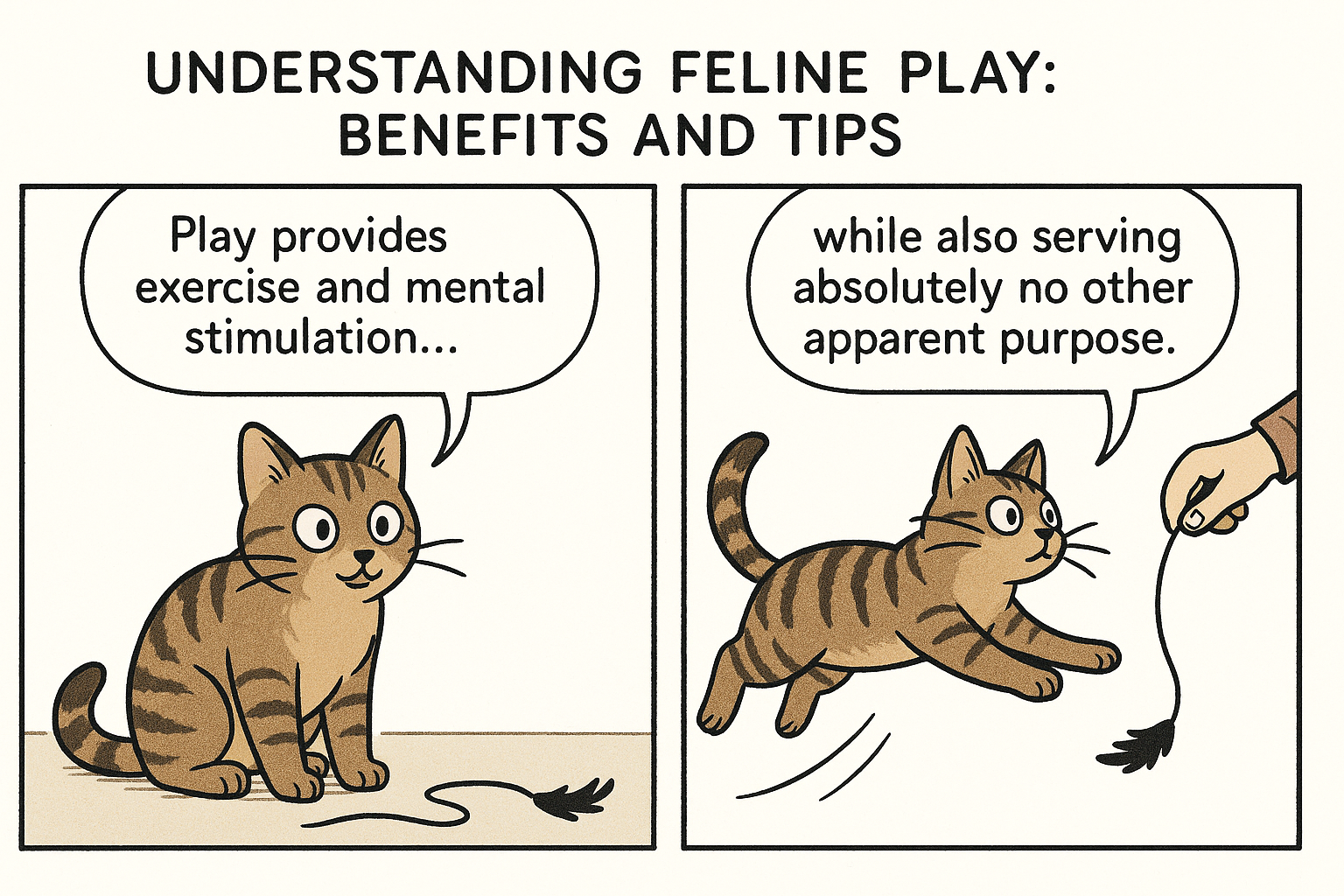
Have you ever wondered why your cat seems to take so much pleasure in ambushing your feet from under the sofa, or why it insists on performing acrobatics at 3 a.m.? Welcome to the world of feline play, where your living room is a jungle and your slippers are prey. But there's more to your cat's playtime antics than just entertainment. Feline play benefits both your cat's physical and mental health, and yes, your sanity too.
TL;DR: Feline play keeps your cat physically fit, mentally stimulated, and helps strengthen your bond. It's crucial for overall well-being!
Why is play important for cats?
Play is not just a frivolous activity for your feline friend; it's a fundamental part of their development and daily life. Play behavior in cats begins as early as two weeks of age, with significant development occurring between four to five weeks. This early start sets the stage for crucial skills development, such as practicing hunting instincts, honing physical coordination, and learning social cues like bite inhibition (Cats Protection).
Moreover, engaging in play has been linked to improved welfare outcomes. According to a study conducted by the University of Cambridge, regular play can reduce problem behaviors and strengthen the human-cat relationship. This isn't just about keeping your cat entertained; it's about providing them with the mental and physical stimulation they need to thrive.
Indoor cats, in particular, require ample stimulation through play to prevent boredom and associated behavioral issues (International Cat Care). Without this, they might resort to less desirable activities, like shredding your curtains or using your favorite rug as a scratch pad.
How do cats benefit from play?
Let's dive deeper into the myriad benefits of play for cats. Physically, play keeps cats fit, which is especially important for indoor cats who don't get to chase real-life prey. A sprightly game of "chase the laser" can mimic those hunting scenarios, burning calories while exercising those spring-loaded legs.
Mentally, play provides vital stimulation that prevents boredom. Cats are natural hunters, and mimicking those instincts through play keeps their brains sharp. Regular playtime has been shown to reduce destructive behaviors and aggression, promoting overall health and well-being (McCallum Centre Animal Hospital).
Furthermore, play allows kittens to learn bite inhibition and social behaviors from their siblings, which is crucial for their development and interaction with humans (ASPCA). This means that a well-played kitten is less likely to see your hand as a clawing post.
In addition to physical and mental benefits, play also strengthens the bond between you and your cat. When you engage in interactive play, you're not just helping them stay fit and healthy; you're also building trust and understanding. A study by the University of Cambridge highlights how play can enhance the human-cat relationship, making your interactions more rewarding.
Cat play tips: How to engage your cat in play
Engaging your cat in play doesn't require a PhD in feline psychology, but a few tips can transform playtime from "meh" to "me-wow!"
-
Invest in a variety of toys: Cats can be fickle, often losing interest in toys that once enthralled them. Keep a rotating selection of toys to maintain their interest. Consider toys that mimic prey, such as feather wands, balls, and interactive laser pointers.
-
Create a play schedule: Cats are creatures of habit. Regular play sessions at the same time each day can provide a predictable routine that they look forward to.
-
Use household items: Sometimes, the best toys are free. A crumpled piece of paper or a cardboard box can provide endless entertainment.
-
Follow your cat's lead: Pay attention to your cat's play style. Do they prefer solitary play or interactive sessions with you? Adjust your approach based on what keeps them engaged.
-
Engage in short, frequent sessions: Cats often prefer several short bursts of play rather than a marathon. Aim for 10-15 minutes a few times a day.
-
Incorporate safe spaces for play: Ensure that your cat has safe areas to play where they won't be disturbed by other pets or household traffic. This can help them feel more comfortable and willing to engage in play.
Avoiding common playtime mistakes
Despite your best intentions, there are a few pitfalls to avoid during playtime. First, never use your hands or feet as toys. This might be cute with a tiny kitten, but it can encourage aggressive behavior as they grow into adults.
Also, be mindful of overstimulation. If your cat seems to be getting too wound up or starts showing signs of aggression, it might be time to end the session. Cats can have a "threshold" for play, and crossing it might lead to a less-than-friendly claw swipe.
Lastly, remember that each cat is unique. What works for one might not work for another. It's about finding that sweet spot where your cat is both entertained and exhausted (in the best way).
For more insights on your feline's behavior, check out our guide to understanding feline behavior. And if you're introducing a new furry friend into your household, our tips for successful first meetings can help ensure a smooth transition.
FAQ
Why is play important for cats?
Play is crucial for cats as it supports their physical fitness, mental stimulation, and development of social skills. Studies show that regular play can reduce problem behaviors and strengthen the bond with their owner.
How can I engage my cat in play?
Engage your cat by using a variety of toys, establishing a play schedule, and following their play style preferences. Incorporate both store-bought and household items to keep things interesting.
What are the risks of not playing with my cat?
Lack of play can lead to boredom and result in destructive behaviors or aggression. It can also affect their physical health if they don't get enough exercise.
How often should I play with my cat?
Aim for several short play sessions each day, around 10-15 minutes each. Cats generally prefer multiple short bursts of activity rather than long sessions.
Can play reduce my cat's aggression?
Yes, regular playtime can help reduce aggression by providing an outlet for their natural predatory instincts and energy, promoting overall well-being.
For more insights on your feline's behavior, check out our guide to understanding feline behavior. Remember, a playful cat is not just a happy cat, but a healthy one too. So, let the games begin!

