

Your cat is sprawled on your lap, purring like an overzealous coffee machine. Is it love? Hunger? Or perhaps a complex commentary on the state of the feline world? Cat purring, as it turns out, is a symphony of meanings and purposes, not just a simple expression of contentment. Let's dive into this feline enigma and decode the rumble beneath the fur.
TL;DR: Cat purring isn't just a sign of happiness. It's a multi-purpose tool for communication, healing, and self-soothing.
Why do cats purr?
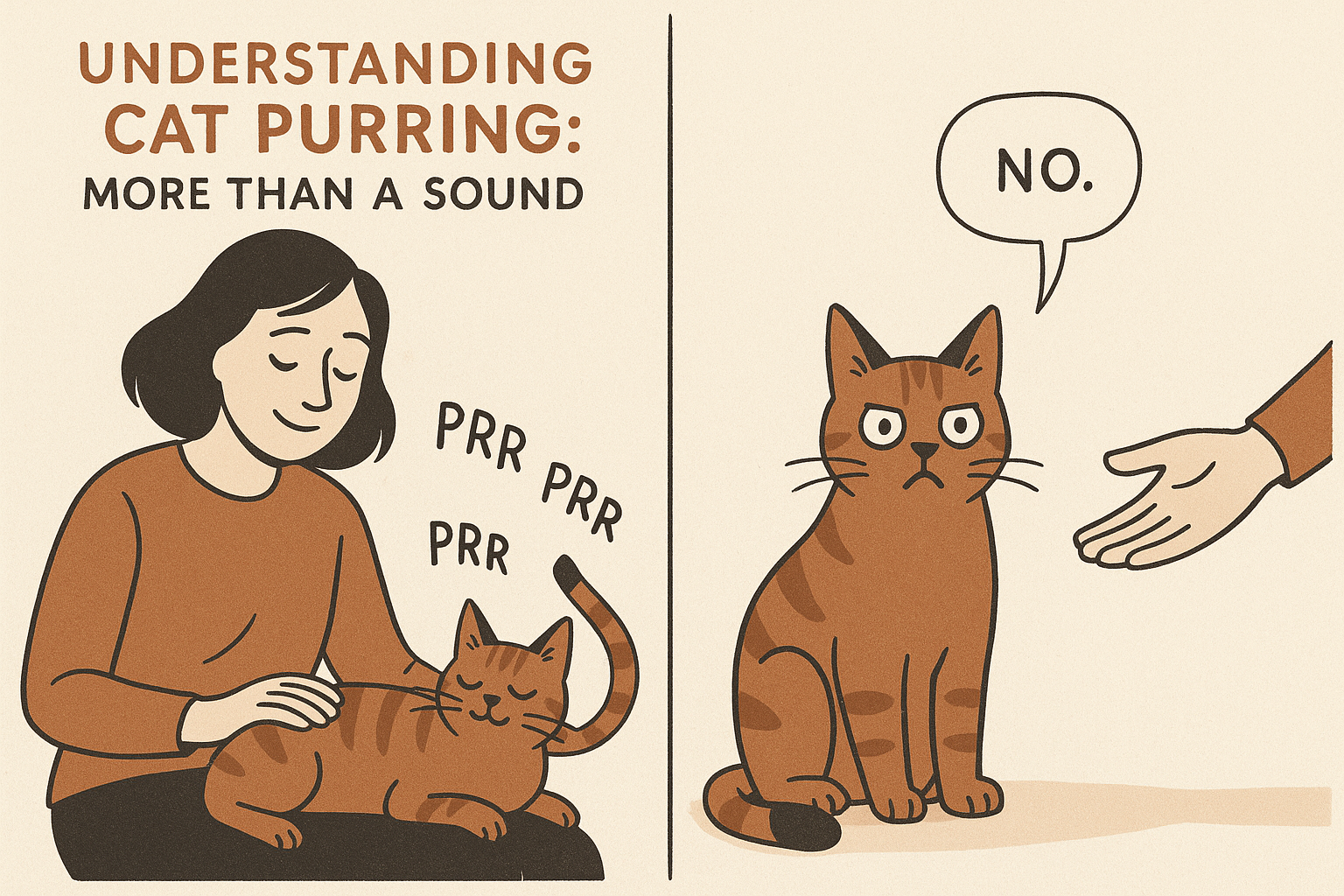
Ah, the million-dollar question: why do cats purr? Purring is often regarded as a low-arousal, affiliative signal, meaning it tends to appear when cats feel social and connected (PMC12695941). It starts early in life, with kittens purring to communicate with their mothers while nursing—essentially the feline equivalent of saying "more milk, please." This bond is crucial for the kitten's survival, as it reassures the mother that all is well in the nest.
But before you assume it's all sunshine and rainbows, consider this: cats also purr when they're stressed, in pain, or even on the brink of death. Talk about a mixed message! Purring can occur in a wide range of circumstances, including tactile interactions like petting and rubbing, but also in distressing situations (NC State University College of Veterinary Medicine). So, the sound isn’t always synonymous with happiness. In fact, some studies suggest that purring may serve as a self-soothing mechanism during stressful times, much like how humans might hum or sing to calm themselves.
The healing power of purring
Here’s where things get a bit sci-fi: the frequency of a cat's purr typically ranges from 25 to 30 Hz, which is associated with promoting healing in bones and tissues (Inspire the Mind). Yes, you read that right—your cat's purr might be a natural healing mechanism. Researchers have found that purring at this frequency can help improve bone density and speed up the healing of broken bones and damaged tissues. Imagine a 2019 study where researchers discovered that exposure to these frequencies could enhance healing rates by up to 20%.
So, while your cat lounges on the couch, purring gently, it might be giving itself a little health boost (or trying to fix that paper cut from yesterday). It’s like having a tiny, furry physicist in your home, working on its own regenerative health plan. This might explain why cats are often seen as resilient creatures, seemingly bouncing back from injuries quicker than other pets. In fact, some veterinarians suggest that the soothing vibrations can also help reduce inflammation and alleviate pain, making purring a natural painkiller.
Practical uses of cat purring
Purring isn’t just a tool for self-healing or social bonding. It's also a nifty way for cats to manipulate their human cohabitants. Ever notice that your cat seems to purr more intensely when it's begging for food or attention? This isn’t a coincidence. Cats have mastered the art of using purring as a way to get your attention—and possibly a few extra treats.
If you listen carefully, you might notice a difference in pitch or intensity. Some cats have a special "solicitation purr" that incorporates a higher frequency, often described as more urgent, to signal to humans that they want something, and they want it now. This behavior has been observed in a study where cats used a specific purr to wake their owners for breakfast, effectively training the humans to respond to their needs. This "solicitation purr" is often accompanied by other behaviors like rubbing against your legs or staring intently at you until you cave in.
What does cat purring mean?
Purring serves as a vocal fingerprint for cats, allowing individual identification—think of it as the cat version of a thumbprint (ScienceDaily). This unique identifier is crucial for feline social interactions but serves us humans too. The more you pay attention to your cat's specific purring nuances, the better you can understand its needs and emotional state.
For instance, regular, rhythmic purring usually signals contentment, while a more sporadic or intense purr could indicate discomfort or even pain. The context is key: a purring cat during a vet visit might be self-soothing rather than basking in the joy of medical attention. Understanding these subtleties can improve your relationship with your feline friend and help you respond more effectively to its needs.
For more insights on feline communication, check out our guide on understanding feline behavior. If you're curious whether purring is a sign of love, our post on cat purring as a sign of affection might interest you.
FAQ
Do all cats purr?
Most domestic cats purr, but not all felines have this ability. Big cats like lions and tigers have different vocal structures that prevent them from purring continuously.
Why do cats purr when they're alone?
Cats may purr when alone to self-soothe. The vibrations can help calm stress, similar to how humans might hum to themselves when anxious.
Can purring help humans?
While there’s no conclusive scientific evidence, some pet owners believe a cat's purring can have calming effects on humans, potentially lowering stress and blood pressure.
Is it bad if my cat never purrs?
Not necessarily. Some cats purr very quietly or infrequently. As long as your cat is healthy and shows other signs of well-being, there's no need to worry.
Can purring be a sign of illness?
Yes, cats sometimes purr when they are ill or in pain. If you notice unusual purring along with other symptoms, it might be a good idea to consult your vet.
Now that you know purring isn't just a happy hum, you can better interpret what your feline friend is trying to tell you. Next time your cat curls up beside you, purring away, you'll understand that it's possibly healing itself, seeking attention, or simply enjoying your company. After all, with cats, it's never just one thing.

