

Most cat owners have experienced the gentle vibration of a purring cat nestled against them and wondered, "Is this purring a sign of love?" The phenomenon of cat purring has long intrigued pet owners and researchers alike. While many associate purring with feline affection, understanding the nuances of this behavior reveals a more complex picture. In exploring whether cat purring is genuinely a sign of love, we must consider the various contexts in which cats purr and what these might indicate about their emotional states. This exploration can help owners better interpret and respond to their feline companions' needs.
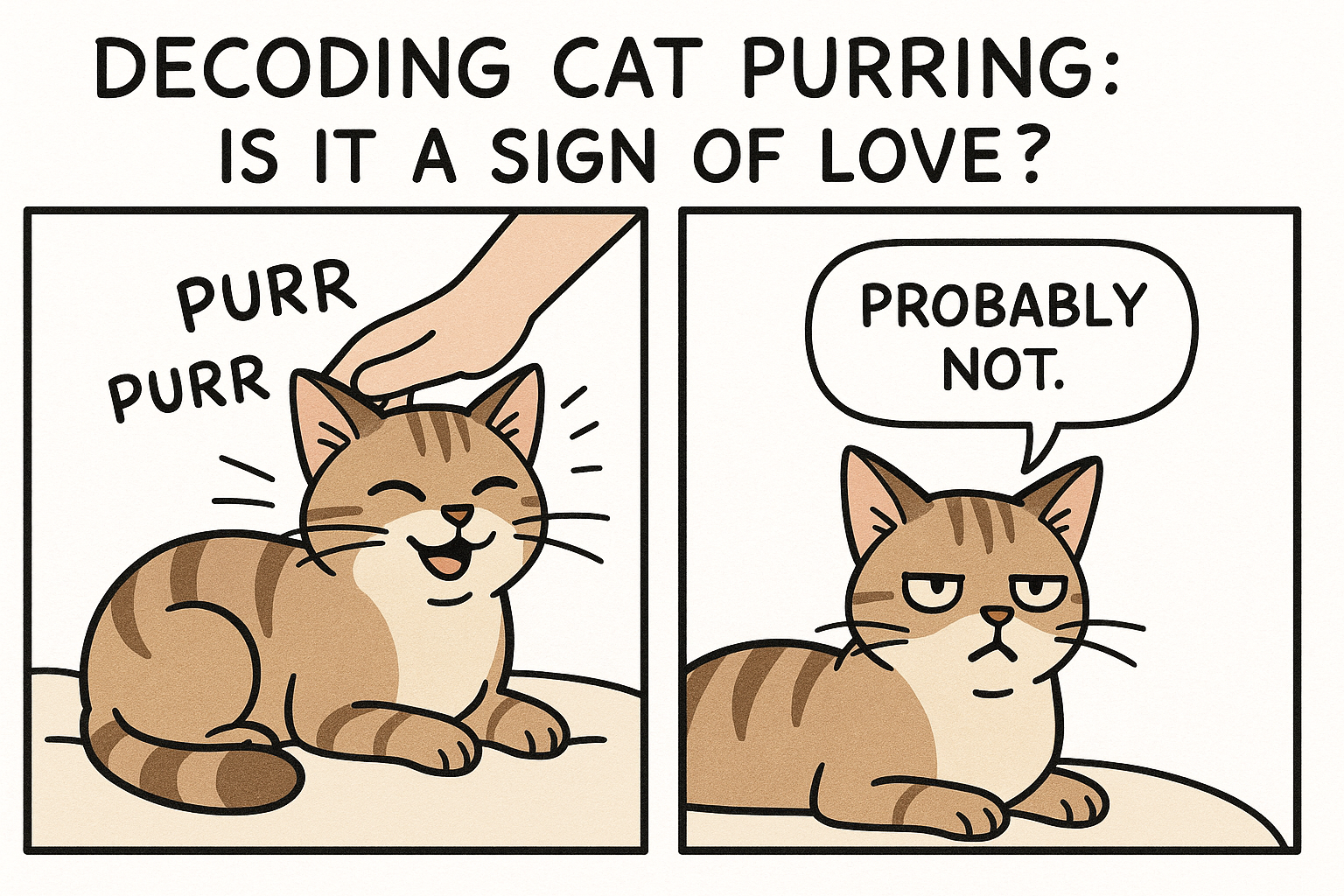
TL;DR: Purring is not an unequivocal sign of love but rather a multifaceted behavior that can indicate contentment, self-soothing, or even healing.
What is Cat Purring?
Cat purring is a unique vocalization produced by the intermittent contraction of the laryngeal muscles, which leads to a rhythmic sound often associated with contentment. However, research suggests that purring is not solely a marker of happiness. Cats also purr in a variety of other situations, such as when they are frightened, injured, or even during labor. This indicates that purring is a complex form of communication serving multiple functions beyond expressing love or happiness.
Understanding the breadth of meanings behind purring is essential for accurate interpretation. For instance, when a cat purrs during a vet visit, it may be using the sound as a means of self-soothing rather than as an expression of contentment. International Cat Care highlights that purring has potential healing properties, suggesting that it may promote physical recovery in times of stress or injury. This duality in the function of purring underscores the importance of context when interpreting this behavior.
Why Do Cats Purr?
The reasons behind why cats purr are varied and extend beyond the simplistic notion of love. Studies show that the frequency of purring vibrations may have therapeutic effects, aiding in the healing of bones and tissues. This behavior likely evolved as a survival mechanism, providing a non-verbal way for cats to communicate their state or needs within their environment. This implies that purring serves both social and physiological functions, making it an integral part of feline communication.
Furthermore, purring can serve as a bonding mechanism between a cat and its human. When accompanied by behaviors such as kneading or headbutting, purring may indeed reflect a level of comfort and affection. Kneading, for example, harkens back to kittenhood when young cats knead their mother's belly to stimulate milk flow. This behavior, often accompanied by purring, can indicate a state of relaxation and fondness towards their owner Cats Protection. The implication here is that while purring can be a sign of affection, it is not its sole purpose.
Interpreting Your Cat's Purring
To discern whether your cat's purring is a sign of love, consider the context in which it occurs. Here are some steps to help you interpret this behavior:
- Observe the Situation: Take note of when and where your cat is purring. Is it during a relaxed setting at home, or are they in a stressful situation like a vet visit? The context can provide significant clues about the underlying reasons for purring.
- Look for Accompanying Behaviors: Is your cat kneading, headbutting, or otherwise showing signs of comfort? These behaviors, combined with purring, may indicate affection. However, if the purring is isolated and occurs in stressful contexts, it may serve a different purpose.
- Consider their Health: If your cat is purring more than usual and shows signs of illness or discomfort, it might be purring to self-soothe or heal. This is particularly important to recognize, as ignoring such signs could overlook a potential health issue.
By paying close attention to these cues, you can better understand what your cat's purring likely signifies in any given moment. This understanding can enhance the bond between you and your cat, allowing for more meaningful interactions.
Misunderstandings and Misinterpretations
A common mistake is to interpret all purring as a positive sign of affection. This misunderstanding can lead to overlooking other important indicators of a cat's emotional or physical state. For example, if a cat is purring during a stressful situation, it should prompt closer observation rather than immediate comfort. Recognizing the multifaceted nature of purring is crucial to avoid misinterpretations.
Additionally, some owners may neglect other forms of communication, such as vocalizations and body language, that provide further insight into their cat's feelings. Linking to other cat behavior resources can assist in building a more comprehensive understanding of feline communication. By expanding our understanding beyond purring, we can better appreciate the complexity of feline emotions and behaviors.
FAQ
Is my cat purring because it loves me?
While purring can be a sign of affection, it is not exclusively so. Cats purr for various reasons, including self-soothing and healing, so context is crucial in interpretation.
What does cat purring mean?
Cat purring can indicate contentment, self-soothing during stress, or even aid in physical healing. It is a multifaceted behavior that varies by context.
How can I tell if my cat truly loves me?
Look for a combination of behaviors such as kneading, headbutting, and relaxed body language alongside purring. These are stronger indicators of affection.
Why does my cat purr when it's sick?
Cats may purr when sick as a self-soothing mechanism or to promote healing, leveraging the potential therapeutic effects of purring vibrations.
Can purring help my cat heal?
There is evidence to suggest that the vibrations from purring can aid in the healing of bones and tissues, making it a potential self-healing mechanism for cats.
Understanding cat purring as a sign of love requires a nuanced approach that considers various factors and contexts. By doing so, owners can better comprehend and respond to their cats' needs and emotions.

