

Your cat is a tiny, furry enigma wrapped in a mystery, hidden inside a riddle, all communicated through a series of meows, purrs, and the occasional chirrup. Cat vocalizations are a fascinating aspect of feline behavior that often leave us wondering if they're sharing their deepest, darkest secrets or just asking for more tuna. Cats meow primarily to communicate with humans, not with other cats. It's a special form of communication crafted just for us (aren't we lucky?). Let's unravel the meanings behind those sounds, so you'll finally know if your cat is plotting world domination or simply wants a belly rub.
TL;DR: Cat vocalizations are a unique form of communication with humans. Understanding them involves recognizing different sounds like meows, purrs, and chirrups, each indicating various needs or emotions.
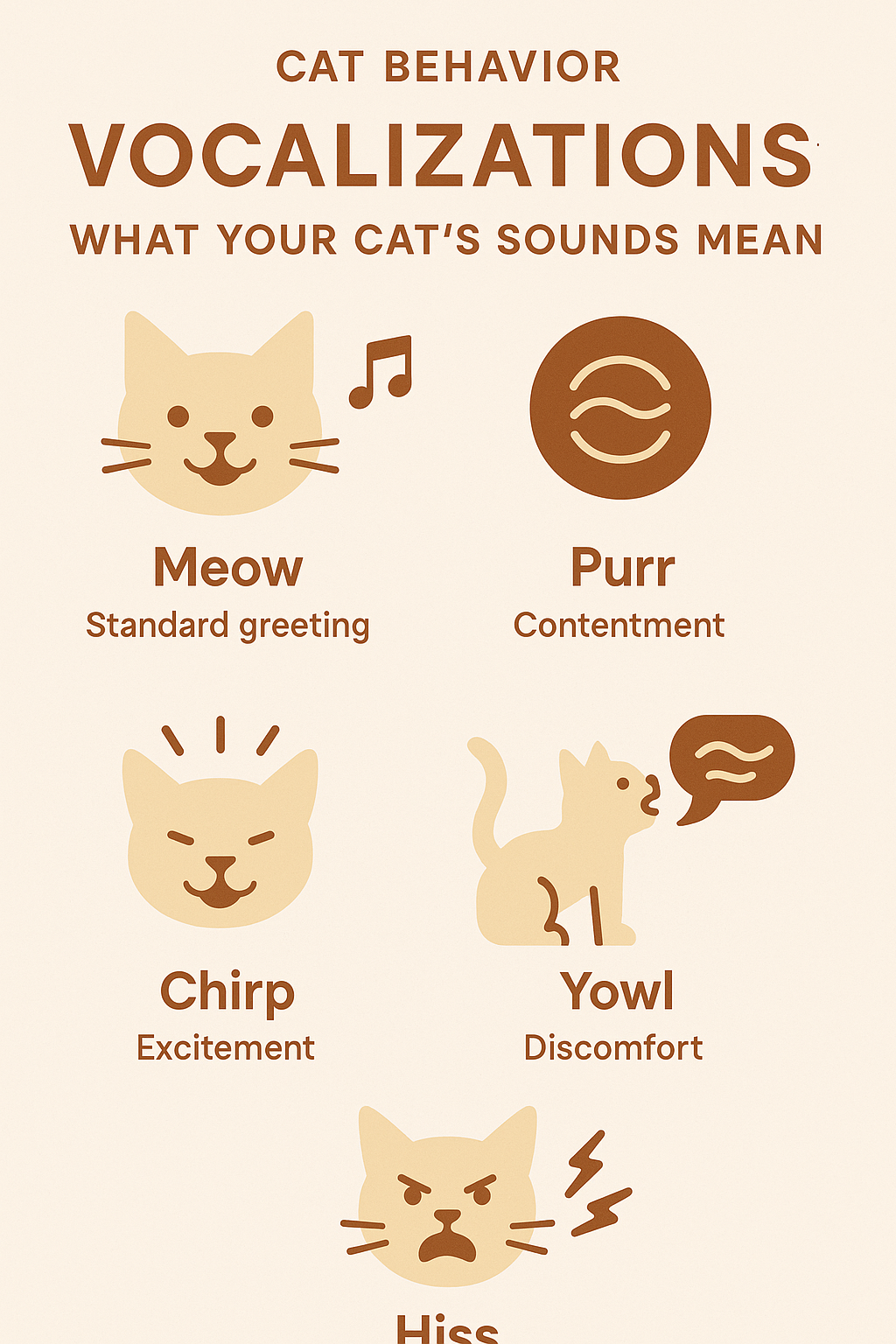
What do different cat sounds mean?
Before we embark on this sonic journey, let's clear up one thing: adult cats rarely meow at each other. That's right, the meow is reserved exclusively for us humans. Studies show that cats meow to express various needs, such as hunger, seeking attention, or asking to be let in or out. Over time, cats develop specific meows tailored to their human's responses (Cats Protection).
- Meow: The Swiss Army knife of cat sounds. A short meow might signal a friendly greeting, while a longer, drawn-out meow could indicate demand ("Feed me now!"). This versatile vocalization is your cat's way of engaging in a dialogue with you, and with time, you'll start recognizing the subtle differences in pitch and duration that convey different messages.
- Chirrup: This trilling sound is often used as a greeting or to get your attention. It's a "hello" with a touch of urgency, as in "Hello, human, I am here, and I would like some attention." Chirruping is often accompanied by a bright-eyed look and a flick of the tail, signaling a desire for interaction and connection.
- Purr: The most misunderstood sound in the feline repertoire. While purring often indicates contentment, it can also be a self-soothing mechanism when a cat is stressed or in pain. Always consider the context and body language alongside the purr. A content cat will typically display relaxed body language, while a stressed cat may purr while showing signs of discomfort or agitation (Cats Protection).
Why is my cat meowing so much?
If your cat is serenading you with constant meowing, several factors could be at play. Cats meow primarily to communicate with humans, and excessive meowing often points to a change in their needs or environment.
- Hunger: Cats are creatures of habit, and if feeding time is delayed, expect a loud reminder. This is often accompanied by a persistent following behavior, where your cat will shadow you around the house until their demands are met.
- Attention: Some cats are more social and require more interaction. If your cat's meows are frequent, they might be asking for some quality time with you. Engaging in play or simply spending time petting them can often satisfy this need.
- Health issues: If your cat suddenly starts meowing more than usual, it could indicate discomfort or health problems. Always consider a health checkup for your cat. Unusual vocalizations could be a sign of pain or distress, and a visit to the vet can help rule out any underlying issues.
How to respond to your cat's vocalizations
Understanding your cat's sounds is only half the battle; knowing how to respond is the key to harmony in your household (or as close as you'll get to harmony with a cat around).
- Observe: Pay attention to the context of the meows. Are they near the food bowl? Are they looking at you expectantly? Observing their body language and the situation can provide clues to what they are trying to communicate.
- Interact: If your cat is seeking attention, try engaging in play or simply spend a few minutes petting them. Regular interaction can help reduce excessive meowing and strengthen your bond.
- Adjust: If the meowing indicates a need, such as hunger, make adjustments to their feeding schedule or environment. Ensuring that your cat's basic needs are met can often reduce the frequency of vocalizations.
Common misconceptions about cat vocalizations
- "Purring means my cat is happy": While it's a common assumption, purring can also indicate stress or pain. Always observe your cat's overall behavior and body language. For instance, a cat that is purring while hiding or avoiding interaction might be trying to comfort itself.
- "Cats meow at other cats": Nope! Meowing is a behavior learned specifically to communicate with humans. If your cat is vocalizing towards another cat, they may be using other sounds like growls or hisses.
- "My cat's meows are all the same": In reality, your cat likely has a range of meows with slight variations that convey different messages. With time, you'll learn to differentiate between them. Each meow can have a distinct pitch, length, and volume, all of which contribute to its meaning.
Explore more about feline behavior in our Understanding Feline Behavior Guide and learn to decode cat body language to become fluent in your cat's unique language.
FAQ
What do different cat sounds mean?
Cat sounds like meows, chirrups, and purrs convey different messages. Meows often indicate needs like hunger or attention, chirrups are greetings, and purrs can mean contentment or stress.
Why is my cat meowing so much?
Excessive meowing can be due to hunger, a need for attention, or underlying health issues. It's essential to observe the context and consider a vet visit if the behavior changes suddenly.
How can I tell if my cat's purring is happy or stressed?
Look at the context and your cat's overall behavior. If they seem relaxed and comfortable, they're likely content. But if they're purring while avoiding interaction or showing signs of discomfort, it could indicate stress.
Do cats meow at each other?
Adult cats typically do not meow at each other. They reserve meowing as a way to communicate with humans, while they use other vocalizations like hisses or growls with other cats.
How can I improve communication with my cat?
Spend time observing your cat's sounds and behaviors, respond appropriately to their meows, and consider their overall environment and routine to enhance communication.

