

Cats are renowned for their mysterious and often independent natures, but an essential aspect of their communication is surprisingly simple: scent. Cat scent communication involves more than just recognizing the presence of other animals; it serves as a sophisticated system through which cats convey information about territory, social status, and reproductive readiness. Understanding these scent-based signals can significantly enhance how we interpret feline behaviors and needs, providing a window into their world that is often overlooked.
TL;DR: Cats use scent to communicate territorial boundaries, social status, and reproductive readiness. This complex system involves urine marking, scent rubbing, and the flehmen response.
Why do cats use scent to communicate?
Cats utilize scent marking to communicate a range of messages to other animals and humans. The most prominent methods include urine marking, object rubbing, and the flehmen response. Urine marking is a well-documented behavior in which cats deposit small amounts of urine in strategic locations. This behavior not only establishes territorial boundaries but also signals reproductive readiness and social status to other cats. According to the ASPCA, this marking can indicate stress or anxiety in a domestic setting, as seen when a cat introduces its scent into new environments. This matters because understanding the context of urine marking can help owners address potential stressors in the home environment.
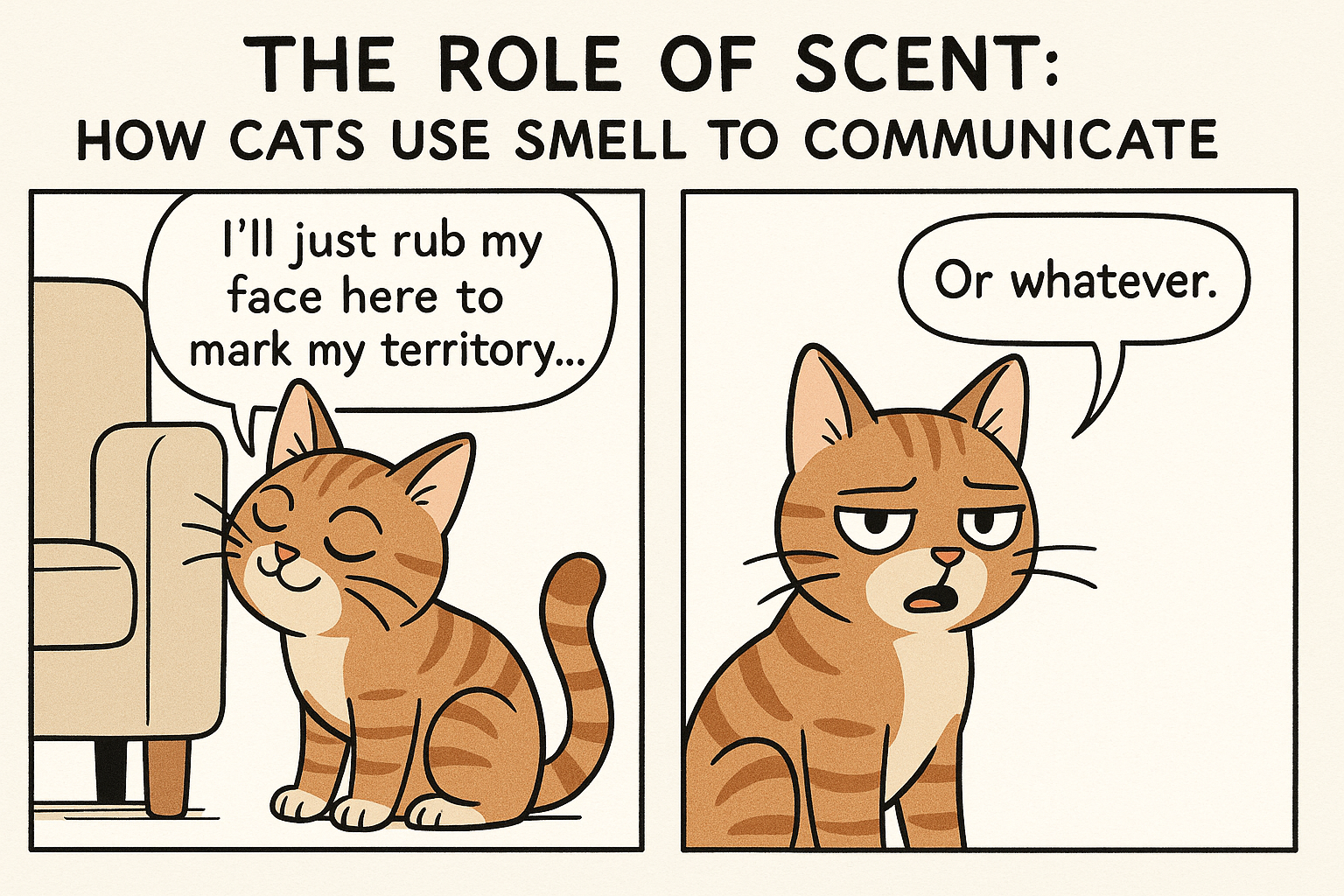
Scent rubbing, also known as bunting, occurs when cats rub their heads or bodies against objects or other animals. This behavior serves a dual purpose of marking territory and reinforcing social bonds. By depositing facial pheromones on household items, cats create a familiar and comforting environment. This is particularly crucial in multi-cat households where establishing a shared scent profile helps mitigate potential conflicts. Research from Cat Care International supports this notion, highlighting the role of scent in facilitating amicable interactions. The implication here is that scent rubbing is not merely a territorial claim but an essential part of social cohesion and comfort within a feline group.
The flehmen response is another fascinating aspect of feline scent communication. This behavior involves a cat curling back its lips and opening its mouth to draw air over the Jacobson's organ, located on the roof of the mouth. This specialized organ allows cats to analyze pheromones and other chemical signals in detail. As noted by Cats Protection, this response is often triggered by unfamiliar or particularly intriguing scents, offering cats a deeper understanding of their environment. This matters because it highlights the complexity of feline sensory perception and its role in environmental awareness.
Managing scent marking in the home
While scent marking is natural, it can be problematic in domestic settings if it involves inappropriate urination. Here are steps to manage this behavior:
- Identify Stressors: Determine if any stressors could be causing increased marking, such as changes in the household or the presence of stray cats outside.
- Provide Resources: Ensure each cat has access to their own set of resources (litter boxes, food, water) to reduce competition.
- Clean Marked Areas: Use enzyme-based cleaners to remove scent traces from marked areas, as regular cleaning agents may not eliminate the pheromones entirely.
- Vet Consultation: If marking persists, consult with a veterinarian to rule out medical issues or to explore pheromone diffusers that can create a calming environment.
Implementing these strategies can help reduce stress-induced marking behaviors and promote harmony in multi-cat homes. It's important to remember that scent marking, while sometimes inconvenient, is a deeply ingrained behavior that serves important communicative functions for your cat.
Common misunderstandings about scent marking
A frequent misconception is that cats mark out of spite or to intentionally annoy their owners. However, the evidence points to scent marking as a communication tool rather than a behavioral issue rooted in malice. It's important to recognize that when a cat marks, it is acting on instinctual behaviors aimed at creating a sense of security and stability in its environment. This perspective shift can help owners approach the problem with more empathy and understanding.
Another misunderstanding is the belief that only unneutered male cats exhibit marking behaviors. While it is true that intact males are more prone to marking, spayed and neutered cats may also mark if they feel threatened or insecure. The implication here is that addressing marking behavior involves understanding the underlying causes, which can vary widely from one cat to another.
Understanding these nuances allows owners to address marking behaviors more effectively, acknowledging them as part of the cat's natural communication repertoire rather than a simple nuisance. By doing so, owners can foster a more harmonious relationship with their feline companions, respecting their need to communicate and feel secure in their environment.
FAQ
How can I tell if my cat is marking or just urinating?
Look for small amounts of urine sprayed on vertical surfaces, which is typical of marking. Regular urination involves larger quantities on horizontal surfaces.
Can scent marking be a sign of a health problem?
Yes, if marking is accompanied by other symptoms such as frequent urination or discomfort, it could indicate a urinary tract issue. Consult a veterinarian for a thorough examination.
How does scent marking affect multi-cat households?
Scent marking can help establish a shared territory and hierarchy, potentially reducing conflicts. However, excessive marking may indicate stress or tension among cats.
Are there products that can help reduce scent marking?
Pheromone diffusers and sprays can create a calming environment, which may reduce stress-related marking. Consult with a veterinarian for recommendations.
Is scent marking common in all cats?
While all cats have the potential to mark, the frequency and triggers can vary based on individual temperament, environment, and social dynamics.
In conclusion, understanding cat scent communication provides invaluable insights into feline behavior and enhances our ability to meet their environmental and social needs, fostering a more harmonious coexistence with our feline companions. For further exploration of cat behaviors, consider reading our detailed guide on cat body language and facial expressions.

