

Understanding cat facial expressions can significantly enhance our ability to interpret feline moods and emotions, despite the inherent challenges. Cats, unlike dogs, have not evolved a wide range of facial expressions due to their solitary nature. Consequently, their facial cues are subtle and require a keen eye to decode. This nuanced understanding is essential for creating a harmonious relationship between cat and human, where trust and emotional needs are reciprocated. By closely observing the position of their ears, the size of their pupils, and eye contact behaviors, we can gain valuable insights into how our feline companions are feeling.
TL;DR: Cats communicate through subtle facial cues such as ear position, pupil size, and eye contact. Recognizing these can help interpret their moods.
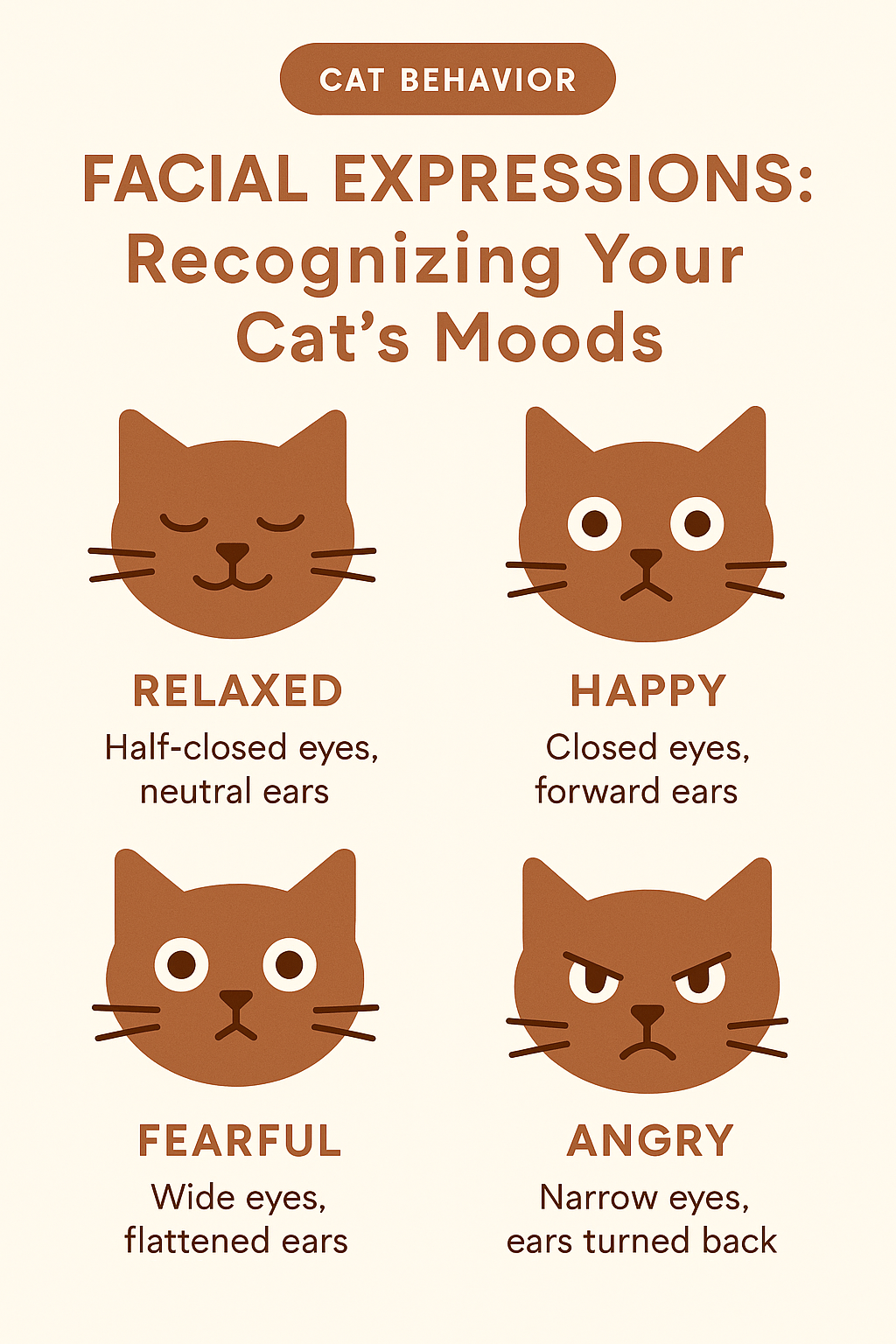
What Do My Cat's Facial Expressions Mean?
The study of cat facial expressions indicates that their limited range of expressions often leads humans to rely more on body language and vocalizations to understand their emotions. Cats use various facial features in combination to convey their feelings. Ears and eyes are particularly telling. When a cat's ears are erect and the pupils are constricted, it may indicate that the cat is alert or possibly frustrated. This matters because such a mood could precede playful aggression or even defensive behavior if the cat feels threatened. Understanding these cues is crucial for preventing misinterpretations that could lead to unnecessary stress for both the cat and the owner.
In contrast, dilated pupils combined with ears flattened against the head often signal fear or distress. This is important to recognize, as it may be a time when your cat seeks a safe space or requires gentle reassurance. The implication here is that by interpreting these subtle cues, we can tailor our interactions to suit their emotional state, thereby fostering a more trusting relationship. Cats Protection provides further insights into these behaviors, emphasizing the importance of context in interpreting feline expressions.
Eye contact also plays a crucial role. Direct eye contact is typically avoided by cats, as it can be perceived as confrontational. Instead, many cat owners are familiar with the "slow blink" – a behavior where a cat closes its eyes slowly in the presence of a human. This gesture is generally interpreted as a sign of relaxation and trust, suggesting that the cat feels comfortable and secure in its environment. Studies such as those by iCatCare highlight the slow blink as a key indicator of a cat's comfort level with its human companions.
Recognizing Feline Moods Through Subtle Signals
Though cats may not exhibit a broad range of facial expressions, their facial nuances are complemented by other body language cues. For instance, the tail can provide additional context. A tail held high often signifies confidence or contentment, aligning with other positive facial expressions. To delve deeper into understanding these signals, you may find it beneficial to explore the broader scope of cat body language and tail talk.
The dynamics of whisker movement can also be telling. Forward-pointing whiskers may indicate curiosity or engagement, while whiskers pulled back against the face can suggest anxiety or fear. These subtle indicators can help distinguish between similar facial expressions, providing a clearer picture of the cat's emotional state. Understanding these nuances requires patience and observation, but the payoff is a deeper connection with your feline friend.
Practical Steps for Interpreting Cat Facial Expressions
To accurately interpret cat facial expressions, consider the following steps:
- Observe the Ears: Erect ears suggest alertness, potentially indicating playful or hunting instincts. Flattened ears may imply fear or aggression.
- Examine the Eyes: Small pupils often occur when a cat is focused or potentially frustrated, while large pupils can signal fear or excitement.
- Monitor Blinking Patterns: Respond to a cat's slow blink with one of your own to reinforce comfort and trust.
- Consider the Context: Always assess facial expressions in conjunction with body language and environmental factors to better understand your cat's mood.
This multifaceted approach to reading cat expressions will enhance your ability to connect with your feline friend, ensuring that their needs are met and their trust is maintained. By taking the time to observe and respond to these cues, you can create a more harmonious living environment for both you and your cat.
Common Misinterpretations of Cat Facial Expressions
A frequent mistake in interpreting cat facial expressions is isolating them from other behavioral cues. For example, a cat with constricted pupils might be perceived as annoyed if observed independently. However, if the body language is relaxed and the tail is swaying gently, the cat might simply be intensely focused or curious about an object or activity. This highlights the importance of considering the entire context rather than focusing on isolated signals.
Furthermore, projecting human emotions onto cats can lead to misunderstandings. Cats do not experience emotions in the same nuanced way that humans do, and their expressions are primarily functional rather than emotional. Engaging with understanding feline behavior can provide further insights into their unique emotional constructs. Recognizing these differences is crucial for interpreting their behavior accurately and ensuring that our responses are appropriate and beneficial.
FAQ
How can I tell if my cat is happy?
A happy cat typically exhibits relaxed body language, such as a high tail, a soft gaze, and possibly gentle purring. Ears will be in a neutral position, and the cat may engage in slow blinking.
What does it mean when my cat's pupils are dilated?
Dilated pupils can indicate excitement, fear, or surprise. Context is key, as environmental stimuli or sudden changes can affect pupil size.
Why does my cat avoid eye contact?
Avoiding direct eye contact is a natural behavior for cats, as prolonged eye contact can be perceived as a threat. They may use a slow blink to show trust instead.
How do I know if my cat is scared?
Signs of fear include flattened ears, dilated pupils, crouched posture, and rapid tail movement. Providing a safe space can help alleviate their stress.
Can cats smile?
Cats do not "smile" in the human sense. Instead, they communicate contentment through body language and facial cues such as relaxed whiskers and soft eyes.
In summary, understanding cat facial expressions involves a comprehensive approach that encompasses facial cues, body language, and environmental context. This knowledge not only enhances the bond between cats and their owners but also promotes a more empathetic and responsive caregiving environment.

